
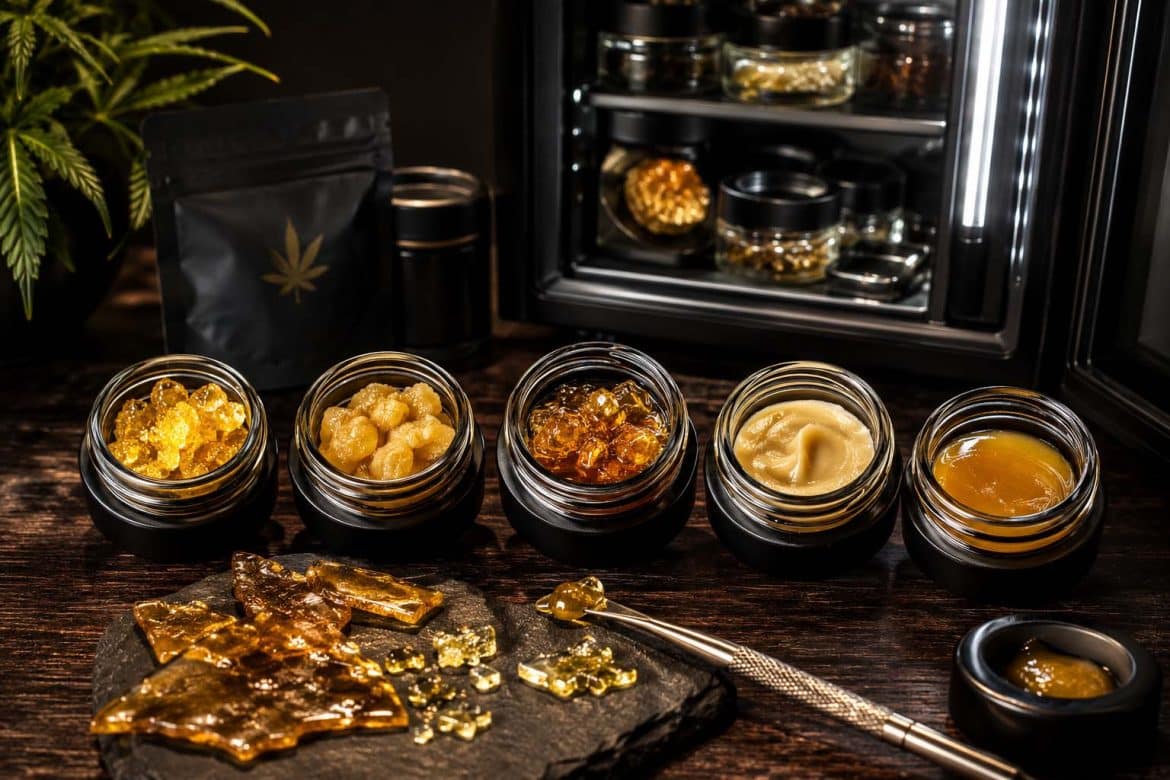
Cannabis extracts and dabs represent the pinnacle of potency, flavor, and purity in the modern market. However, because of their specialized manufacturing processes, products like live resin, rosin, shatter, and budder are highly sensitive to their environment. If you leave your extracts sitting out on a counter or expose them to improper elements, they will rapidly lose their premium quality.
Failing to handle your storage properly results in a harsh-tasting, weaker-hitting product due to the rapid breakdown of active compounds. To protect your investment, you must shield your stash from environmental damage. In this ultimate 2026 guide, we will cover exactly how to store cannabis concentrates to ensure your extracts remain perfectly fresh, exceptionally flavorful, and potent down to the very last dab.

The Four Enemies of Concentrate Freshness
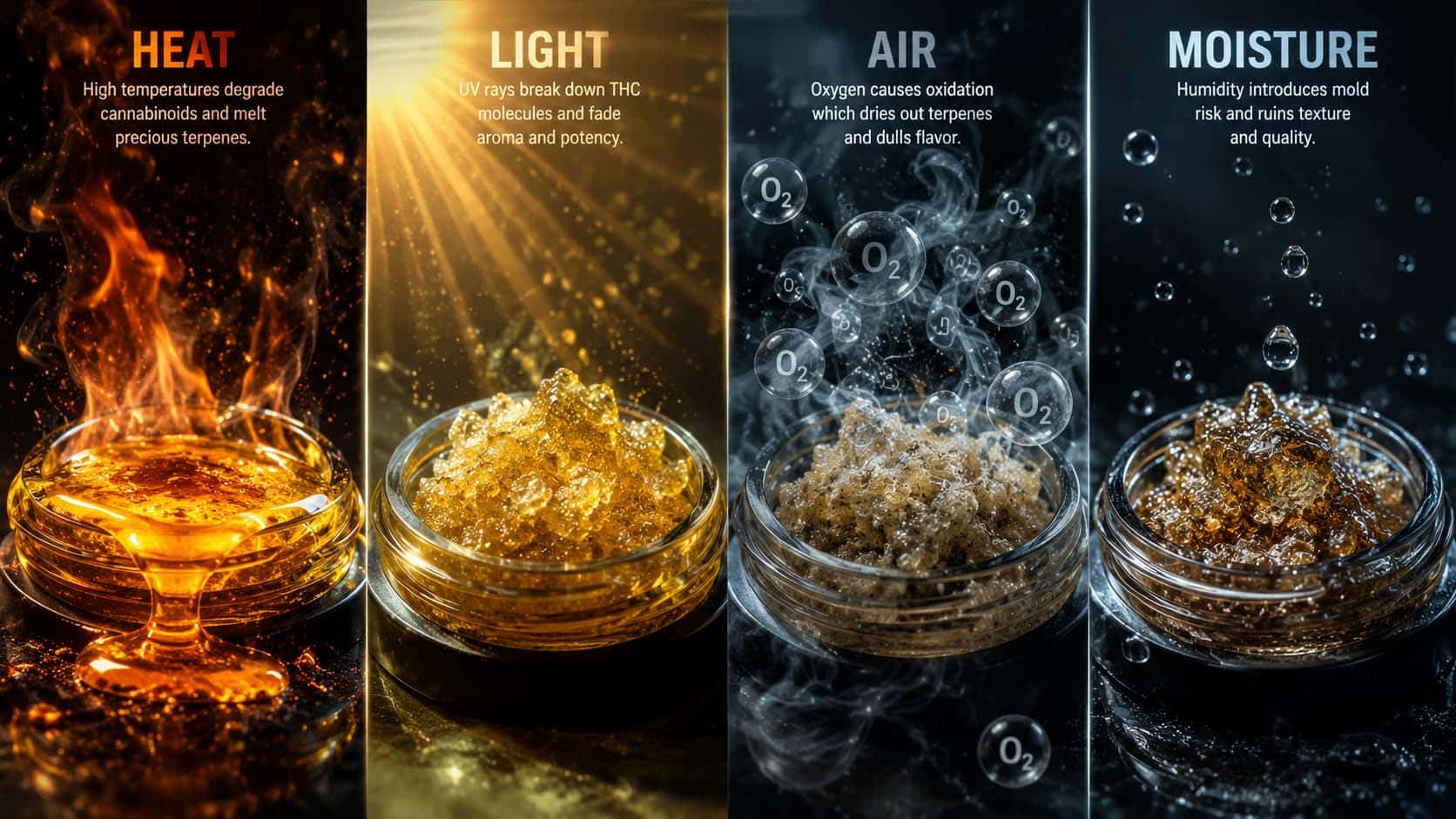
Every single storage decision you make comes down to defeating four fundamental environmental factors: heat, light, air, and moisture. Exposure to any of these elements is the ultimate enemy of active cannabinoids and delicate aromatic profiles.
Understanding how these factors interact with your extracts helps you avoid unexpected product degradation:
- Heat: High temperatures accelerate cannabinoid degradation and cause stable textures like wax or crumble to melt, separating into an unmanageable, sticky fluid.
- Light: Exposure to direct sunlight or harsh indoor lighting triggers a chemical reaction that breaks down tetrahydrocannabinol (THC) at a molecular level, converting it into CBN.
- Air: Oxygen triggers oxidation, an irreversible process that gradually evaporates delicate aromas and dries out softer extract varieties into brittle, harsh textures.
- Moisture: High humidity levels inside a storage area introduce moisture, which can ruin the material’s texture or create a breeding ground for mold and mildew.
Choosing the Right Container Material
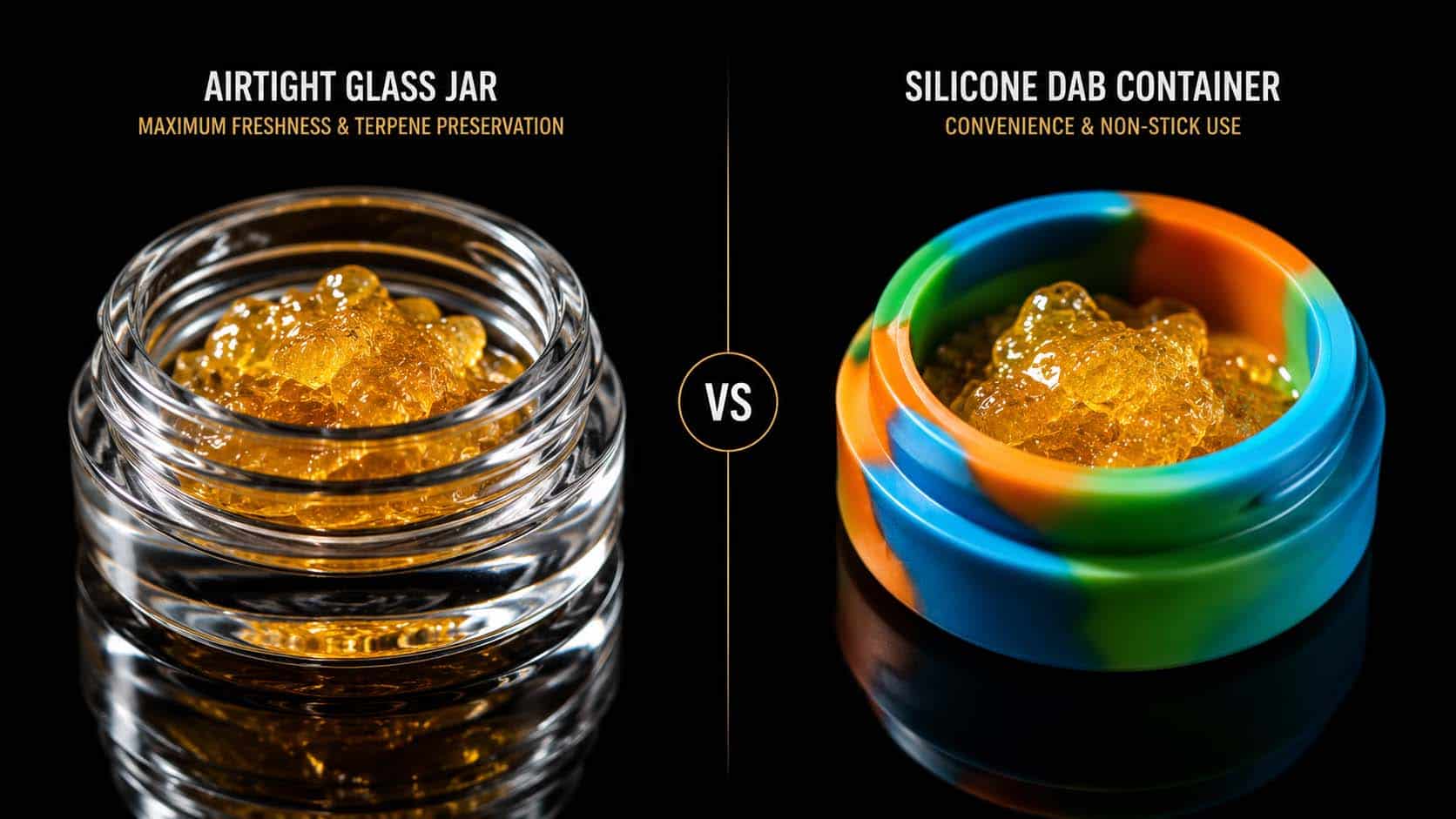
The first step in proper concentrate care is picking the correct vessel. While it is tempting to use whatever container you have lying around, different materials serve completely distinct purposes based on the timeline of your consumption.
| Container Material | Best Suited For | Key Advantage | Major Disadvantage |
|---|---|---|---|
| Airtight Glass Jars | Medium to Long-Term Storage | Non-porous, completely airtight, prevents terpene evaporation. | Fragile; clear glass does not block harmful UV light. |
| Medical-Grade Silicone | Short-Term Use (Under 1 Week) | Incredible non-stick surface; perfect for sticky budders or sauces. | Not fully airtight; can cause terpenes to degrade over time. |
| Parchment Paper | Shatter & Stable Textures | Prevents solid textures from adhering to outer surfaces. | Provides zero protection from air or humidity on its own. |
| Plastic Jars | Not Recommended | Cheap and highly portable for quick transport. | Can leach chemicals or static-attract premium material remnants. |
Short-Term vs. Long-Term Storage Strategies
How you store your extracts depends entirely on how quickly you plan to consume them. If you buy a small amount to enjoy over the weekend, a simple, dark drawer or cupboard that stays at room temperature (ideally below 21°C) will keep your product perfectly safe. Always make sure the container is sealed tight between uses, and limit the number of times you open it to keep fresh oxygen out.
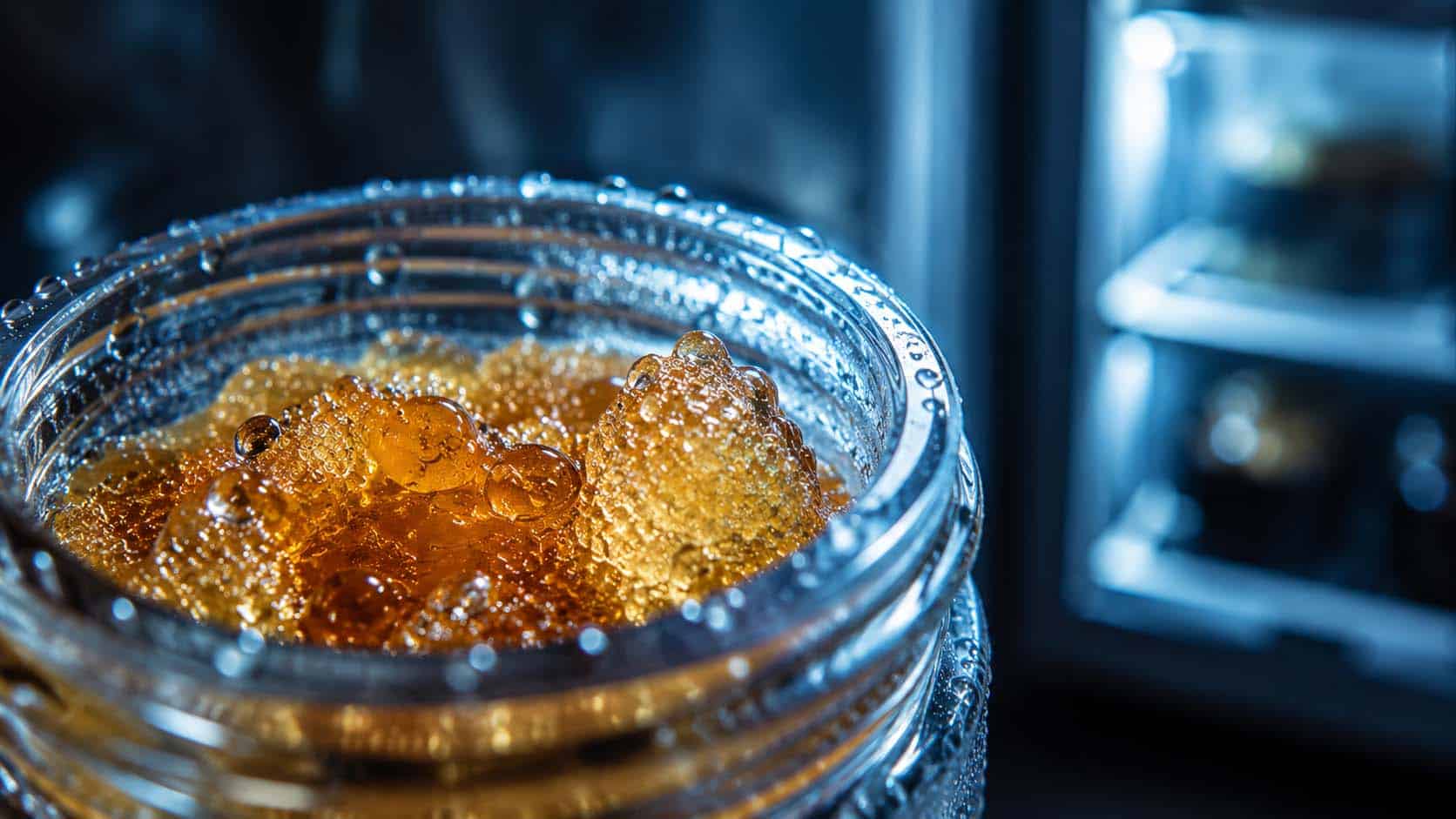
For long-term preservation stretching past two weeks, utilizing cold storage is the absolute gold standard. Keeping volatile, terpene-rich products like live resin or cold-cured rosin in a refrigerator or a dedicated climate-controlled cooling unit preserves their exact consistency and aromatic profile for months.
Chart 1: Expected Concentrate Shelf Life by Storage Environment
This visual timeline displays how different environments preserve the overall quality, aroma, and potency of your extracts over time.
Room Temperature (Open Air / Poor Seal): 1 to 2 Weeks Maximum Quality
Cool, Dark Drawer (Airtight Glass Container): 1 to 3 Months Preservation
Refrigerated Cold Storage (Double-Sealed Glass Jar): 6 to 12 Months Maximum Freshness
The Golden Rule of Cold Storage: Managing Condensation
While cold storage is highly effective at slowing down the natural degradation process, it introduces a major physical hazard: condensation. When you pull a cold container out of a refrigerator and open it immediately, the sudden temperature difference causes moisture from the surrounding air to instantly condense directly onto the cold concentrate.
This unwanted moisture will ruin the consistency of your extract and cause dangerous popping and spitting when it comes into contact with a heated element. To prevent this, always follow a strict double-sealing protocol. Place your airtight glass container inside a secondary resealable bag before placing it in the fridge. Most importantly, when you are ready to consume your product, allow the sealed package to sit on your counter for at least fifteen to twenty minutes to reach full room temperature before breaking the seal.
Tailoring Storage to Specific Concentrate Types
Different extraction methods yield entirely different textures, and each requires a slightly customized approach to stay fresh. The breakdown below highlights the ideal environment for the most popular concentrate formats on the market today.
| Concentrate Type | Ideal Storage Container | Recommended Location | Sensitivity Level |
|---|---|---|---|
| Live Resin & Rosin | Opaque or Dark Airtight Glass Jar | Refrigerator (Stable Cold) | Extreme (High terpene volatility) |
| Shatter | Parchment Paper inside a Glass Jar | Cool, Dark Cabinet or Drawer | Moderate (Prone to melting in heat) |
| Wax, Budder & Crumble | Airtight Glass or Medical Silicone | Cool, Dark Cabinet or Refrigerator | Moderate (Can dry out if exposed to air) |
| Distillate Vape Cartridges | Stored Upright in Original Packaging | Room Temperature Drawer | Low (Hardware sensitive to temperature swings) |
Pro-Tips for Everyday Concentrate Care
Beyond selecting jars and managing temperatures, incorporating a few simple daily habits into your routine will make a massive difference in preserving the long-term quality of your stash.
First, always avoid direct manual handling. Touching your extracts with your fingers introduces natural body heat, natural oils, moisture, and micro-contaminants that quickly alter the product’s consistency. Instead, always use a clean, dedicated stainless steel or titanium tool to portion out your material.
Second, pick the right container size. If you store a single gram of live resin in a massive wide-mouth glass jar, the large volume of trapped air inside that jar will accelerate oxidation. Try to match the size of the container to the volume of the product to minimize the internal oxygen pocket.
Chart 2: Impact of Storage Conditions on Terpene Preservation
This bar chart displays the approximate percentage of flavorful terpenes retained over a six-month storage period under varying environmental settings.
Perfect Storage (Airtight Glass + Cold Temperature): 95% Terpenes Retained
Standard Storage (Airtight Jar at Room Temperature): 75% Terpenes Retained
Improper Storage (Silicone Jar or Light Exposure): 40% Terpenes Retained
For deeper scientific insights into how different materials interact on a chemical level, you can explore peer-reviewed consumer preservation studies hosted on the National Institutes of Health PubMed Database. To learn more about the unique characteristics of different extract types, check out the comprehensive strain and product resource guides found on Leafly Cannabis Education or browse the verified community storage forums on Weedmaps Connect. For formal institutional guidelines regarding public safety, proper home storage practices, and legal federal compliance measures, you can read the direct policy resources available on the official Health Canada Portal.
When looking to optimize your setup with high-quality gear, consider picking up a set of specialized airtight glass jars, organizing your daily rotation with non-stick medical silicone containers, or investing in dedicated tools by exploring our collection of premium cannabis extract accessories.
Conclusion: Protecting Your Extracts
Mastering how to store cannabis concentrates does not require expensive luxury equipment, but it does require consistency and a basic understanding of environmental science. By eliminating exposure to heat, light, air, and moisture, you prevent the conversion of active cannabinoids and stop the evaporation of valuable aromatic profiles. Whether you are keeping a stable shatter in a dark bedroom drawer or protecting a delicate live rosin inside a cold refrigerator, taking these careful steps ensures your sessions remain consistently flavorful, smooth, and incredibly potent.
Frequently Asked Questions
1. Why did my hard shatter turn into a soft, sticky paste?
This process, often called “sugarization” or melting, happens when shatter is exposed to elevated temperatures or ambient humidity. Heat breaks down the stable, glass-like structure of the extract, causing the internal terpenes to separate from the cannabinoids.
2. Can I store my cannabis concentrates in a standard kitchen freezer?
Freezing is highly effective for extreme long-term storage (many months), but it carries a high risk of moisture damage from freeze-thaw cycles. If you must use a freezer, the product must be completely vacuum-sealed or double-bagged to block out frost.
3. How long do concentrates stay fresh when stored properly?
When sealed inside airtight glass jars and kept in a cool, dark place, most concentrates easily maintain their original quality, texture, and full potency for 6 to 12 months. More stable forms like distillate can last even longer.
4. Is it safe to store different types of extracts together in the same jar?
It is best to keep different extracts separate. Mixing textures or strains inside a single container can cross-contaminate their unique terpene profiles, causing them to lose their individual flavors and blending into a single, generic aroma.
5. Does using a silicone container alter the taste of long-term extracts?
Yes, if left for more than a week. Over time, volatile terpenes can act as natural solvents that slowly degrade silicone, leading to a loss of aroma and a potential chemical off-flavor. For periods longer than a few days, always use glass.
Leave a comment